My attention was recently alerted to this interesting yet, for some, debilitating condition.
Crossing a bridge is usually a routine part of everyday travel. Right? However for some people, including professional drivers, it can trigger intense fear, anxiety and an urge to avoid the journey.
Symptoms experienced can be – dizziness, trembling, palpitations, nausea and a strong fear of losing control. If this is you then you are probably suffering from Gephyrophobia.
Now avoiding bridges may provide immediate relief, but avoidance can also just reinforce the fear. Therefore avoidance is not a long term solution it is just compounding the problem.
Here at, Anxiety Clinic Dublin I provide practical solutions for people experiencing anxiety and phobias.
Focussing on understanding the anxiety response, developing personal coping strategies and working towards greater confidence around situations that trigger the fears.
Therefore if the fear of bridges is affecting your travel, work, relationships or independence, feel free to reach out to me and I will be happy to chat about providing a solution to your problem.
You can find out more about David McAllister and Anxiety Clinic Dublin at :
I wrote last week about the persistent rain here in Dublin and guess what, it’s still raining.
This shouldn’t be a concern to most of us other than the inconvenience and annoyance of getting wet.
Although the increase in flooding has certainly created feelings of fear , worry and anger.
However what if rain is a problem for you.?
Does the sound of heavy rain make you anxious?
Do you cancel plans when showers are forecast?
If fear of rain is interfering with your daily life, you may be experiencing rain phobia (ombrophobia) — and effective, evidence-based treatment is available in Dublin.
At AnxietyClinicDublin, we specialise in helping people overcome specific phobias using proven psychological therapies.
You don’t have to let the weather control your life.
What Is Rain Phobia?
Rain phobia is an intense fear response triggered by rainfall or stormy weather. Unlike simply disliking rain, this anxiety can cause:
In a city like Dublin — where rain is frequent — avoidance becomes exhausting and limiting.
The good news? Rain phobia is highly treatable.
How We Treat Rain Phobia at AnxietyClinicDublin
We use structured, evidence-based approaches that target the root of the fear.
Hypnotherapy Cognitive Behavioural Therapy (CBT)
HCBT helps you:
• Challenge catastrophic thinking about rain
• Reduce anxiety sensitivity
• Break the avoidance cycle
• Build confidence in real-world situations
Gradual Exposure Therapy
Avoidance strengthens fear.
Exposure therapy gently reverses it.
With professional guidance, you gradually face rain-related triggers in a controlled and supportive way — building tolerance step by step until anxiety reduces naturally.
Practical Anxiety Management Tools
You will also learn:
• Calm breathing techniques
• Nervous system regulation strategies
• Grounding skills for panic
• Tools to stay steady during bad weather
These skills give you back a sense of control.
Why Seek Professional Treatment?
Rain is part of life in Ireland. Avoiding it completely is not realistic.
With the right support, you can:
✔ Stop cancelling plans
✔ Travel confidently in wet weather
✔ Reduce panic symptoms
✔ Feel calm when rain starts
Most specific phobias respond well to short-term, focused therapy.
Take the First Step
If fear of rain is affecting your work, relationships, or wellbeing, support is available.
AnxietyClinicDublin provides confidential, professional rain phobia treatment in Dublin using evidence-based HCBT , exposure therapy and anxiety management techniques.
Small steps lead to lasting change.
👉 Contact AnxietyClinicDublin today to arrange an initial consultation.
With Halloween fast approaching it can often evoke themes of fear, making it a prime time for the spotlight on various phobias. Here are some of the most common phobias associated with Halloween (incidentally there is nothing funny about no. 6):
1. Samhainophobia – Fear of Halloween: Named after Samhain, the ancient Celtic festival that Halloween is based on, this phobia refers to a fear of Halloween itself and the associated symbols, events, and customs.
2. Nyctophobia – Fear of the Dark: Halloween activities often take place at night, and many people with this phobia may feel heightened anxiety as darkness is a central element of the holiday.
3. Phasmophobia – Fear of Ghosts: Ghosts are a common theme during Halloween, making people with this phobia especially uncomfortable around the imagery or discussions of spirits and the supernatural.
4. Arachnophobia – Fear of Spiders: Spiders are a frequent Halloween decoration, and people with this common phobia may feel anxious or disturbed by the appearance of spiders, real or fake.
5. Claustrophobia – Fear of Enclosed Spaces: Haunted houses and Halloween attractions often involve cramped, dark spaces, which can trigger feelings of claustrophobia.
6. Coulrophobia – Fear of Clowns: Halloween often brings out people in clown costumes, which can provoke extreme anxiety for those who suffer from this fear.
7. Necrophobia – Fear of Death or Dead Things: Halloween’s association with death, including skeletons, graveyards, and depictions of the undead, can be overwhelming for those with necrophobia.
8. Thanatophobia – Fear of Dying: Related to necrophobia but more focused on the individual’s own mortality, Halloween’s death-related imagery can exacerbate this fear.
9. Hemophobia – Fear of Blood: With many costumes and decorations featuring fake blood or gory themes, this phobia may be heightened during Halloween.
10. Masklophobia – Fear of Masks: Halloween costumes often involve masks, which can trigger fear and anxiety in people uncomfortable with concealed faces.
These phobias are intensified by the themes of horror, death, and the unknown that are central to Halloween celebrations but it doesn’t have to be all trick and no treat.
These phobias can be dealt with and managed effectively if you are willing to give up what you are holding onto.
If any of the above affects you emotionally then feel free to contact me to discuss how you can best get the help you need.
It’s usually the scream that alerts you. There is uninvited guest to dinner.
A moving shadow on the wall, the floor or God forbid the actual dinner table!
It’s that time of year again, the seasons are changing, but for the common garden spider it’s business as usual. Well fed on a summer bounty it’s time to come inside and find a mate.
“That’s nice, well for them, they have been kept pests off my hydrangeas all summer so the least they deserve is a little romance.” I hear you say?
Probably not as far as you are concerned, they can scroll along “Spider Tinder” and head for the other side of town.
But that’s not going to happen, they are in your house looking for love and don’t really give a damn what you think.
Think, how you think that’s the key. The spiders don’t care so why should you?
Because you do care, you believe spiders are:
• Ugly
• Scary
• Dangerous
• Harmful
They impact on your life, stopping you from doing things:
• Entering rooms in your house
• Gardening
• Hiking
• Even enjoying Halloween
So the real question is do you want this to continue? Feeling scared and anxious, missing out on pleasurable and indeed just normal activities?
What if you have had enough and want to think and feel differently?
What if you want to stop missing out and engaging more in life?
Well why not look into hypnotherapy?
Hypnotherapy: A Spider-Sense for Overcoming Arachnophobia
Arachnophobia, the fear of spiders, is a common phobia that can significantly impact a person’s quality of life. Many individuals find themselves avoiding activities like gardening, hiking, or even entering their own homes due to the fear of encountering a spider. Hypnotherapy, a therapeutic technique that utilizes the power of the mind, has emerged as a promising approach for overcoming arachnophobia.
How Does Hypnotherapy Work for Arachnophobia?
Hypnotherapy involves guiding a person into a deep state of relaxation and focus, often referred to as a trance. In this state, the therapist can work with the individual’s subconscious mind to address the underlying fears and beliefs associated with arachnophobia. This may involve:
* Identifying and challenging negative thoughts and beliefs: Hypnotherapists can help individuals identify and challenge irrational thoughts about spiders, such as believing they are dangerous or harmful.
* Rewiring neural pathways: Through hypnotherapy, it’s possible to rewire the brain’s neural pathways associated with fear, gradually replacing negative responses with more positive and neutral ones.
* Creating a sense of control: Hypnotherapy can help individuals develop a sense of control over their fear, enabling them to manage their anxiety and respond to spiders in a more rational way.
Benefits of Hypnotherapy for Arachnophobia
* Non-invasive and drug-free: Hypnotherapy is a natural and non-invasive approach that does not involve medication or invasive procedures.
* Tailored treatment: Hypnotherapy can be customized to address the specific needs and fears of each individual, ensuring a personalized treatment plan.
* Rapid results: Many individuals report experiencing significant improvements in their arachnophobia symptoms within a relatively short period of hypnotherapy sessions.
* Long-lasting benefits: The positive changes achieved through hypnotherapy can often be long-lasting, providing individuals with ongoing relief from their fear.
Is Hypnotherapy Right for You?
Hypnotherapy can be an effective tool for overcoming arachnophobia, but it’s important to note that it may not be suitable for everyone. If you’re considering hypnotherapy, contact me to discuss your specific situation and determine if it’s the right approach for you.
Remember, conquering arachnophobia is a journey, and the path may vary for each individual. With the help of hypnotherapy, I have helped many people to overcome their fear of spiders and regain their confidence in facing the world.
Social anxiety disorder or social phobia is much more than shyness.
It is an extreme fear that won’t go away.
It can touch on your:
• Everyday goings-on
• Self-confidence
• Relationships
• Work or school life
Most of us will worry about social situations from time-to-time. However someone with social anxiety feels worried before, during and after events.
I have been dealing with people with anxiety issues for over a decade and I believe that the following 5 steps will be beneficial to anyone with social anxiety / social phobia issues. For more information see anxietyclinicdublin.com
Symptoms of social anxiety:
• Fear meeting strangers, starting discussions, talking on the phone, working or shopping
• Avoid or worry a lot about social activities – group conversations, mixed company, and parties
• Worry about doing something you think is embarrassing – blushing, sweating or appearing useless
• Find it tough to do things when others are watching
• Fear blame, avoid eye contact or have low self-esteem
• Often have symptoms such as feeling sick, sweating, trembling or heart palpitations
• Have panic attacks
How you can overcome social anxiety:
Social anxiety can be difficult to deal with but there are things you can try yourself.
1. Understand your anxiety
Try to appreciate more about your anxiety. Think about what’s on your mind and which social situations you find the most problematic and how you behave in these situations. This will help you get a clearer idea of the specific areas or triggers that are most difficult for you.
2. Beliefs and assumptions
Assess your beliefs and assumptions about a situation. Ask yourself could they be unrealistic ones e.g. when you feel a social situation went poorly. Ask yourself did the whole situation go badly or just a bit of it. Check the facts to support this or if you’re assuming the worst.
3. Move your attention
Try to focus your attention to people, things, sounds, sights around you. Be aware that your anxiety symptoms might not be as evident as you might think and fear.
4. Do activities you would normally avoid
This can be hard at first. Start with small goals and work towards more dreadedevents gradually. Create a list of the circumstances that cause you to experience anxiety. From the most frightening situation to one that causes only a slight anxiety.
5. Hypnotherapy
A trained anxiety therapist can help you manage your thoughts, feelings and behaviour processes. Thus make you aware of how past events can influence the present and impact on your life going forward. By utilising various anxiety interventions techniques the therapist will help you:
➢ Develop acknowledgement of your current anxiety state
➢ Build resilience to the triggers of your anxiety
➢ Construct new powerful ways to deal with your thoughts, feelings and behaviours
➢ Give you the power to live the life you deserve.
For further information about coping with anxiety feel free to contact me:
These were the words of someone I knew suffering from Musophobia, the fear of mice.
Now the mouse in question was not a real mouse , l think we all would have a reasonable expectation to be scared if it was. Like something that has escaped from a laboratory experiment that has gone terribly wrong.
No, this was a teacher dressed up as the dormouse in their child’s school production of :Alice in Wonderland.
Nonetheless the fear still existed as did the symptoms such as sweating, trembling, rapid heartbeat, shortness of breath, and nausea.
The production was fast approaching and they were desperate to attend and not to miss their child’s performance.
So we got down to work, using the powers of hypnotic imagination and concentration in a relaxed state. Utilising powerful suggestion and imagery to address the underlying fears and anxieties associated with mice ( of any shape or size).
I have to admit it was touch and go as the deadline grew closer but before the curtain was raised they occupied their seat to be part of a performance of a lifetime ( and the show wasn’t too bad either, although the dormouse did seem to sleep through most of the show…)
You see you don’t have to succumb to your fears and phobias and miss out on the pleasures in life.
There is always a choice, a choice to live your life on your terms and seize the opportunities that fear can rob you from.
I was recently asked if there is a phobia for everything. There’s certainly potential for this to be true and over the next few months I’m going to focus attention on specific phobias. So just to get started, here is an A to Z of phobias some of which you may be more familiar with than others. I have certainly not come across “Y” yet but there again who has?
A – Acrophobia – Fear of heights. B – Bibliophobia: Fear of books or reading. C – Coulrophobia: Fear of clowns. D – Dentophobia: Fear of dentists or dental procedures. E – Emetophobia: Fear of vomiting. F – Arachnophobia: Fear of spiders. G – Glossophobia: Fear of public speaking. H – Hydrophobia: Fear of water. I – Ichthyophobia: Fear of fish. J- jangelaphobia – fear of jelly. K – Katsaridaphobia: Fear of cockroaches. L – Lepidopterophobia: Fear of butterflies or moths. M – Mysophobia: Fear of germs or dirt. N – Nyctophobia: Fear of darkness or night. O – Ophidiophobia: Fear of snakes. P- Pogonophobia :Fear of beards Q – Quadraphobia:fear of the number four R – Trypanophobia: Fear of needles or injections. S – Scopophobia: Fear of being stared at or watched. T – Thanatophobia: Fear of death or dying. U – Uranophobia: Fear of heaven. V – Venustraphobia: Fear of beautiful women. W – Wiccaphobia: Fear of witches and witchcraft. X – Xenophobia: Fear of strangers or foreigners. Y – Yokai-phobia: Fear of Japanese supernatural creatures. Z – Zoophobia: Fear of animals.
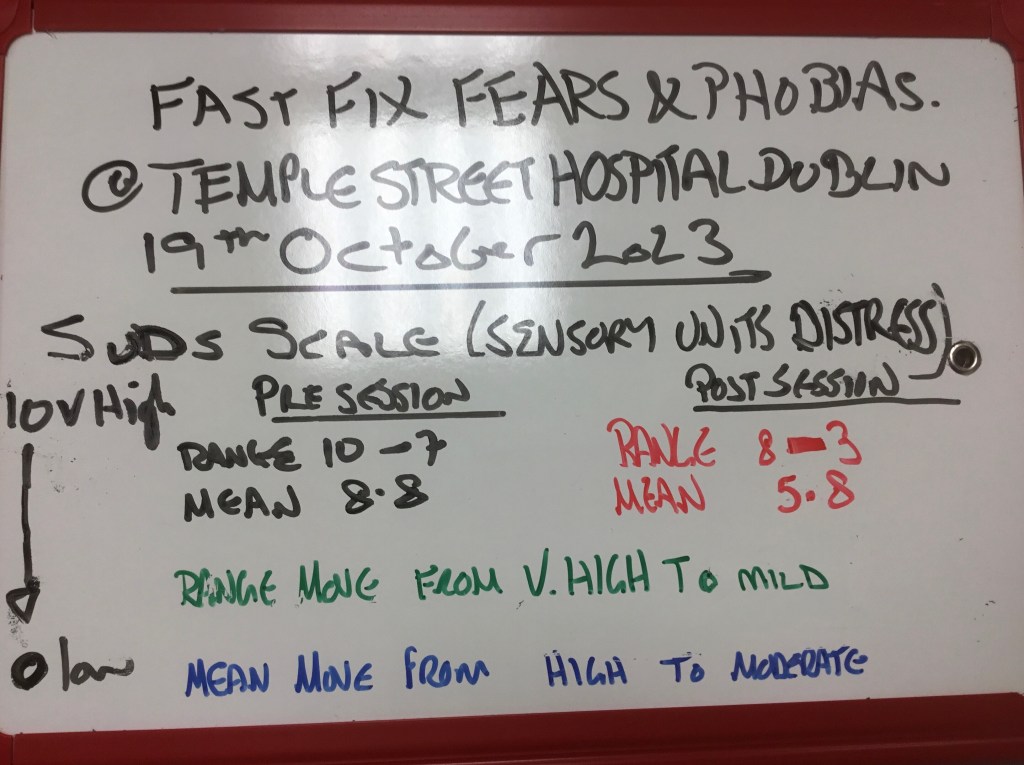
A big thank you to CHI Temple Street for facilitating my Fast Fix Fears and Phobias workshop today. Super condensed version but still produced great results. I really want to congratulate the participants for taking the brave step to face their fears/ phobias and for the effort they put in today. Wishing them all well on continuing the progress they made today.