Wise words from the band Magazine in their song “About the Weather” however I wonder how many of us get stuck on the weather and how it affects our mood.
As the summer solstice fast approaches here in the northern hemisphere, it is fair to say that the weather hasn’t reflected this much so far. Certainly here in Ireland autumnal coats and hats are still in fashion and retail shops will soon be selling off their unwanted summer stock.
However let’s put things into perspective worrying about the weather is pointless for several reasons:
Uncontrollable Nature: The weather is a natural phenomenon that cannot be controlled by individuals. Worrying about something you have no control over is generally unproductive.
Forecast Accuracy: Modern weather forecasting is relatively accurate, and being prepared based on forecasts is more practical than worrying.
Inevitability: Weather will happen regardless of concern. Accepting and adapting to it is more beneficial than stressing over it.
Emotional Impact: Worrying can lead to unnecessary stress and anxiety, which can affect mental health negatively.
Focus on Action: Instead of worrying, it’s more useful to focus on actions you can take, like dressing appropriately, planning indoor activities, or rescheduling events.
In essence, while it’s important to be aware and prepared for the weather, worrying about it doesn’t offer any practical benefits.
So let the weather be and focus on what you can deal with, your thoughts, feelings and behaviours.
Remember the sun always shines even behind the clouds.
I am sometimes asked if a fear of heights (acrophobia) and a fear of flying (aviophobia or aerophobia) are connected as I have came across many people happy to get on an aeroplane to cross an ocean yet can’t climb a ladder to clean a window and vice versa.
Like most phobias the psychological and physical responses are the same such as:
• increased heart rate, sweating, dizziness, and panic attacks.
• negative thinking patterns and previous experiences, can influence both fears.
However the triggers are different :
• Acrophobia: This fear is triggered by situations where an individual is at a high elevation and can see the drop, such as being on a tall building, a ladder, or a cliff. The fear is often related to the potential for falling(basiphobia)
• Aviophobia: This fear is specifically related to the act of flying in an airplane. It can be triggered by various aspects of flying, such as takeoff, turbulence, or the confined space of an aircraft, and may include fears of crashing or lack of control.
Yet there are overlaps and differences:
• People with acrophobia may also experience fear when flying because airplanes are high above the ground. The thought of being high up can trigger anxiety even if the context is different.
• However, not all people with acrophobia have a fear of flying. Some might feel safe within the enclosed environment of an airplane, where they do not perceive the height in the same way as being on an open structure.
• Conversely, some people with a fear of flying do not have a fear of heights. Their fear may be more related to the specifics of being in an aircraft, such as claustrophobia, turbulence, or the inability to escape the situation easily.
Thus , while there is a potential connection between a fear of heights and a fear of flying, they are distinct phobias with different triggers and may or may not co-occur in the same individual. Yet other phobias such as basiphobia and claustrophobia may be more connected and play a part in the fear triggers and responses.
Hypnotherapy is a powerful proven therapeutic method for dealing with the emotional responses to these fears and phobias and can easily be applied to anyone who wants to get on with their lives. Perhaps visiting people in far away places or getting on the rollercoaster rides with the kids.
You see you don’t have to succumb to your fears and phobias and miss out on the pleasures in life.
There is always a choice, a choice to live your life on your terms and seize the opportunities that fear can rob you from.
These were the words of someone I knew suffering from Musophobia, the fear of mice.
Now the mouse in question was not a real mouse , l think we all would have a reasonable expectation to be scared if it was. Like something that has escaped from a laboratory experiment that has gone terribly wrong.
No, this was a teacher dressed up as the dormouse in their child’s school production of :Alice in Wonderland.
Nonetheless the fear still existed as did the symptoms such as sweating, trembling, rapid heartbeat, shortness of breath, and nausea.
The production was fast approaching and they were desperate to attend and not to miss their child’s performance.
So we got down to work, using the powers of hypnotic imagination and concentration in a relaxed state. Utilising powerful suggestion and imagery to address the underlying fears and anxieties associated with mice ( of any shape or size).
I have to admit it was touch and go as the deadline grew closer but before the curtain was raised they occupied their seat to be part of a performance of a lifetime ( and the show wasn’t too bad either, although the dormouse did seem to sleep through most of the show…)
You see you don’t have to succumb to your fears and phobias and miss out on the pleasures in life.
There is always a choice, a choice to live your life on your terms and seize the opportunities that fear can rob you from.
I was recently asked if there is a phobia for everything. There’s certainly potential for this to be true and over the next few months I’m going to focus attention on specific phobias. So just to get started, here is an A to Z of phobias some of which you may be more familiar with than others. I have certainly not come across “Y” yet but there again who has?
A – Acrophobia – Fear of heights. B – Bibliophobia: Fear of books or reading. C – Coulrophobia: Fear of clowns. D – Dentophobia: Fear of dentists or dental procedures. E – Emetophobia: Fear of vomiting. F – Arachnophobia: Fear of spiders. G – Glossophobia: Fear of public speaking. H – Hydrophobia: Fear of water. I – Ichthyophobia: Fear of fish. J- jangelaphobia – fear of jelly. K – Katsaridaphobia: Fear of cockroaches. L – Lepidopterophobia: Fear of butterflies or moths. M – Mysophobia: Fear of germs or dirt. N – Nyctophobia: Fear of darkness or night. O – Ophidiophobia: Fear of snakes. P- Pogonophobia :Fear of beards Q – Quadraphobia:fear of the number four R – Trypanophobia: Fear of needles or injections. S – Scopophobia: Fear of being stared at or watched. T – Thanatophobia: Fear of death or dying. U – Uranophobia: Fear of heaven. V – Venustraphobia: Fear of beautiful women. W – Wiccaphobia: Fear of witches and witchcraft. X – Xenophobia: Fear of strangers or foreigners. Y – Yokai-phobia: Fear of Japanese supernatural creatures. Z – Zoophobia: Fear of animals.
The Guardian article a quick walk leads to bright ideas
A great article on the benefits for getting outside and moving. That bright idea that has been alluding you might just be a few steps around the block away. Give it a go today you might just surprise yourself.
Important that this message is well received, for him, his family and those feeling the same way. It’s never easy to make a call like this, as you are well aware, however the more we can spread this information the better for all of us.
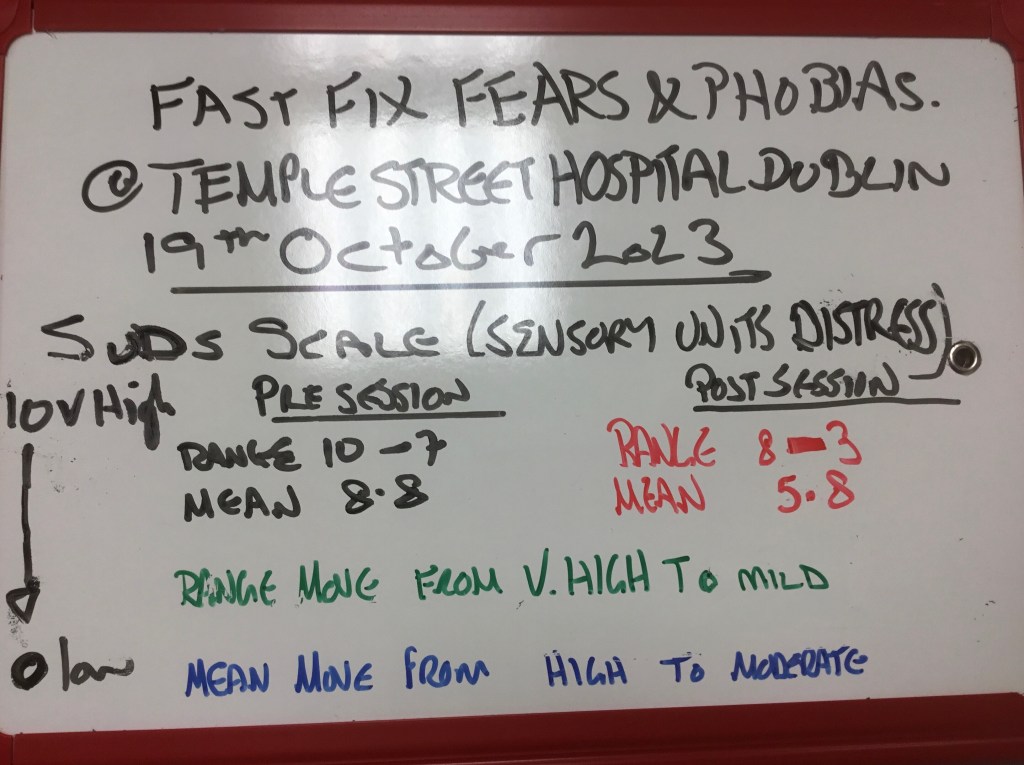
A big thank you to CHI Temple Street for facilitating my Fast Fix Fears and Phobias workshop today. Super condensed version but still produced great results. I really want to congratulate the participants for taking the brave step to face their fears/ phobias and for the effort they put in today. Wishing them all well on continuing the progress they made today.
Today is a further opportunity for all of us to become more aware that mental health is as important as physical heath and requires as much maintenance. Indeed to borrow a phrase from President Truman they are: “Two halves of the same walnut” So today of all days put your mental health first and take action as nothing changes without it. Also here’s a nutritional tip why not try eating a few walnuts as they just happen to be a superfood for the brain.
Always interesting to work with and learn from ASD clients. This article below will give you an insight into five ways how hypnosis can help. Well worth a read.
Read and reread this fantastic poem until you realise what fear really is.
It is said that before entering the sea a river trembles with fear.
She looks back at the path she has traveled, from the peaks of the mountains, the long winding road crossing forests and villages.
And in front of her, she sees an ocean so vast, that to enter there seems nothing more than to disappear forever.
But there is no other way. The river can not go back.
Nobody can go back. To go back is impossible in existence.
The river needs to take the risk of entering the ocean because only then will fear disappear, because that’s where the river will know it’s not about disappearing into the ocean, but of becoming the ocean.
Taking a day off from work or regular responsibilities can have several benefits for your overall well-being and productivity. Here are some of the key advantages:
Rest and Relaxation: A day off provides an opportunity to recharge your energy and reduce stress levels. It allows you to step away from the demands of work and take time for yourself.
Mental Health: Regular breaks and time off can positively impact your mental health. It can help prevent burnout, reduce feelings of overwhelm, and improve your mood.
Physical Health: Taking a day off can give your body a chance to recover from physical strain and potential ailments related to stress and overwork.
Increased Productivity: Paradoxically, taking time off can boost your productivity in the long run. It allows you to return to work feeling refreshed and more focused, potentially leading to higher-quality work and better problem-solving abilities.
Enhanced Creativity: Stepping away from your routine can foster creativity and inspiration. Having new experiences and exploring different activities can stimulate your mind and lead to fresh ideas.
Work-Life Balance: Taking regular days off is essential for maintaining a healthy work-life balance. It enables you to spend quality time with family and friends, pursue hobbies, and engage in activities you enjoy.
Prevention of Burnout: When people overexert themselves without taking breaks, it can lead to burnout, which negatively affects their physical and mental health. Taking time off helps to prevent burnout and fosters long-term job satisfaction.
Improved Relationships: Spending time away from work can strengthen relationships with family and friends. It allows you to be more present and engaged during your time off.
Self-Care: Taking a day off is a form of self-care, which is crucial for maintaining a healthy and balanced lifestyle.
Long-Term Health Benefits: Consistently taking days off and managing stress can have positive effects on your long-term health, reducing the risk of stress-related illnesses.
Remember, the benefits of taking a day off can be maximized when you use your time intentionally. Engaging in activities that bring you joy, practicing mindfulness, and avoiding work-related tasks during your day off can help you reap the full advantages of this well-deserved break.
So ditch the guilt and jump right in, you deserve it, go on treat yourself.
30 days and 30 ways to make life a little bit more positive.
Try out the daily tasks see which ones work best for you. Keep going until the end of June. If you miss one or two, that’s okay, the tasks are small enough and doable enough to double up on any given day.