Fear of heights person standing high up on a metal pole
Introduction
Do you feel anxious standing on a balcony, climbing stairs, or visiting scenic viewpoints? If so, you may be experiencing Acrophobia—a common but often misunderstood anxiety condition.
The good news is that effective, natural solutions are available here in Ireland. Hypnotherapy combined with Neuro-Linguistic Programming (NLP) is helping many peopleovercome fear of heights and regain confidence in everyday life.
What Is Fear of Heights (Acrophobia)?
Acrophobia is an intense fear triggered by heights, even in safe situations. It can affect your ability to enjoy travel, work environments, or even simple activities like using escalators or walking across bridges.
Common Symptoms:
• Rapid heartbeat
• Dizziness or nausea
• Panic attacks
• Feeling frozen or unable to move
• Strong urge to escape
If left unaddressed, this fear can limit your lifestyle and opportunities.
Why Do People Experience Height Anxiety?
Fear of heights can develop for many reasons, including:
• A past fall or frightening experience
• Learned fear from others
• Stress or general anxiety
• The brain’s natural “fight or flight” response
In many cases, the fear is deeply rooted making it difficult to overcome through logic or willpower alone.
How Hypnotherapy Can Help
Hypnotherapy is a safe, natural, and increasingly popular approach across Ireland for treating anxiety and phobias.
It works by diverting your conscious attention thus allowing access to the deeper patterns and neurological connections driving your fear.
Benefits of Hypnotherapy:
• Identifies and addresses root causes
• Reprogrammes negative thought patterns
• Reduces anxiety quickly and effectively
• Builds calmness and confidence
Many clients report feeling noticeably more relaxed around heights after just a few sessions.
NLP Techniques for Fear of Heights
Neuro-Linguistic Programming (NLP) complements hypnotherapy by focusing on how your thoughts and internal language shape your emotional responses.
Key NLP Methods:
• Visualization: Replacing fear with calm mental imagery
• Anchoring: Creating a physical trigger for relaxation
• Reframing: Changing how you interpret height-related situations
• Pattern interruption: Breaking automatic fear responses
Together, these techniques help you respond differently—and more calmly—to heights.
Why Choose Anxiety Clinic Dublin?
Working with a local practitioner in Dublin offers several advantages:
• Personalised, one-to-one sessions
• Understanding of local lifestyle and stress factors
• Convenient in-person or online appointments
• Ongoing support throughout your progress
Whether you live in Dublin or elsewhere in Ireland, professional hypnotherapy can provide a structured, supportive path to overcoming your fear.
Simple Steps You Can Start Today
While professional help is highly effective, you can begin managing your fear with these techniques:
Controlled Breathing:
Slow your breathing to calm your nervous system.
Gradual Exposure:
Take small steps—start with low heights and build confidence gradually.
Positive Self-Talk:
Replace fearful thoughts with supportive ones like:
A qualified hypnotherapist can tailor sessions specifically to your needs and help you progress faster.
Take the First Step Toward Confidence
Living with Acrophobia can feel limiting—but change is absolutely possible. With hypnotherapy and Neuro-Linguistic Programming, you can retrain your mind, reduce anxiety, and feel more in control.
If you’re based in Dublin or anywhere in Ireland, now is the perfect time to take that first step.
👉 Ready to overcome your fear of heights?
Consider booking a hypnotherapy session today and start building confidence in a safe, supportive way.
I wrote last week about the persistent rain here in Dublin and guess what, it’s still raining.
This shouldn’t be a concern to most of us other than the inconvenience and annoyance of getting wet.
Although the increase in flooding has certainly created feelings of fear , worry and anger.
However what if rain is a problem for you.?
Does the sound of heavy rain make you anxious?
Do you cancel plans when showers are forecast?
If fear of rain is interfering with your daily life, you may be experiencing rain phobia (ombrophobia) — and effective, evidence-based treatment is available in Dublin.
At AnxietyClinicDublin, we specialise in helping people overcome specific phobias using proven psychological therapies.
You don’t have to let the weather control your life.
What Is Rain Phobia?
Rain phobia is an intense fear response triggered by rainfall or stormy weather. Unlike simply disliking rain, this anxiety can cause:
In a city like Dublin — where rain is frequent — avoidance becomes exhausting and limiting.
The good news? Rain phobia is highly treatable.
How We Treat Rain Phobia at AnxietyClinicDublin
We use structured, evidence-based approaches that target the root of the fear.
Hypnotherapy Cognitive Behavioural Therapy (CBT)
HCBT helps you:
• Challenge catastrophic thinking about rain
• Reduce anxiety sensitivity
• Break the avoidance cycle
• Build confidence in real-world situations
Gradual Exposure Therapy
Avoidance strengthens fear.
Exposure therapy gently reverses it.
With professional guidance, you gradually face rain-related triggers in a controlled and supportive way — building tolerance step by step until anxiety reduces naturally.
Practical Anxiety Management Tools
You will also learn:
• Calm breathing techniques
• Nervous system regulation strategies
• Grounding skills for panic
• Tools to stay steady during bad weather
These skills give you back a sense of control.
Why Seek Professional Treatment?
Rain is part of life in Ireland. Avoiding it completely is not realistic.
With the right support, you can:
✔ Stop cancelling plans
✔ Travel confidently in wet weather
✔ Reduce panic symptoms
✔ Feel calm when rain starts
Most specific phobias respond well to short-term, focused therapy.
Take the First Step
If fear of rain is affecting your work, relationships, or wellbeing, support is available.
AnxietyClinicDublin provides confidential, professional rain phobia treatment in Dublin using evidence-based HCBT , exposure therapy and anxiety management techniques.
Small steps lead to lasting change.
👉 Contact AnxietyClinicDublin today to arrange an initial consultation.
As an anxiety therapists, I often invite clients to sit with uncertainty, yet my own relationship with the past can quietly shape how I show up in the room. Acceptance of the past does not mean approval of every decision, outcome, or missed opportunity; it means recognizing that those moments were shaped by the resources, awareness, and capacity available at the time. When we soften our resistance to what has already occurred, we create internal space for compassion—for ourselves and, by extension, for our clients.
Integrating this acceptance with future planning allows us to move forward without being driven by regret or fear. The past becomes a source of learning rather than limitation. From this grounded place, we can set intentional goals: refining our clinical skills, deepening self-care practices, and staying aligned with our values. By seeing where we have been and consciously choosing where we are going, we model resilience and psychological flexibility—the very qualities I aim to cultivate in those I support.
Our perception of anxiety is as personal as the colour of our eyes. It is sourced from our very existence such as : individual experiences, personality traits, cultural background and social support systems.
Anxiety is a natural human response to stress or perceived threats and it serves as a protective mechanism that helps us cope with potentially dangerous situations. However, when anxiety becomes excessive or overwhelming, it can negatively impact our daily life and well-being.
Here are some common aspects of how anxiety might be perceived:
1. Emotional experience: Anxiety is often associated with feelings of fear, worry, nervousness, or unease. You may even experience it as a sense of impending doom or a feeling of being on edge.
2. Physical sensations: You are probably familiar with the physical symptoms of anxiety , such as increased heart rate, sweating, trembling, muscle tension, headaches, gastrointestinal discomfort and shallow breathing.
3. Cognitive effects: Your racing thoughts, difficulty concentrating, excessive worry about potential negative outcomes and a heightened focus on perceived threats is feed by your anxiety.
4. Behavioral responses: Common behaviours are avoidance, which involves avoiding situations or activities that trigger their anxiety. Also you might seek reassurance, engage in repetitive behaviours, or have difficulty making decisions.
5. Time perception: When experiencing anxiety, time may feel like it’s passing slowly, and you might feel trapped in the moment or feel like the anxiety will never end.
6. Social interactions: Anxiety can impact social interactions, leading to feelings of self-consciousness, fear of judgment, and avoidance of social situations. This can be exasperated during the holiday season.
7. Impact on functioning: Severe anxiety can interfere with a your ability to carry out daily tasks, work, or maintain relationships.
It’s important to note that while some level of anxiety is normal and can be adaptive and a source of energy, excessive or chronic anxiety can be detrimental to your mental and physical health.
Therefore just as your perception of anxiety is unique so should be your solutions and seeking the correct professional help is essential to effectively understand and manage your thoughts, feelings and behaviours.
As a member of the CHPA, my qualifications , experience, continuous professional training, peer support and supervision can reassure you that I will provide the highest possible level of service to your unique needs.
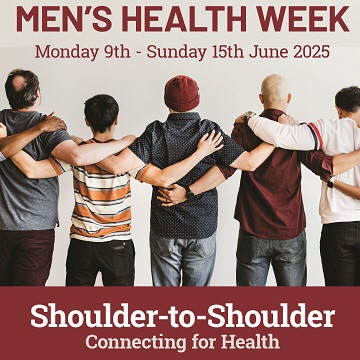
International Men’s Health Week (MHW) always begins on the Monday before Father’s Day and ends on Father’s Day itself. During 2025, it will run from Monday 9th until Sunday 15th June.
MHW is celebrated in many European countries, as well as in the USA, Australia, New Zealand, Canada and a number of other places worldwide. The overall aims of the week are to:
– Heighten awareness of preventable health problems for males of all ages.
– Support men and boys to engage in healthier lifestyle choices / activities.
– Encourage the early detection and treatment of health difficulties in males.
But why is there a need to hold a Men’s Health Week? … Males constitute almost 50% of the population on the island of Ireland and, therefore, deserve to have a gender lens focused upon their specific health needs. Research clearly shows that these men experience a disproportionate burden of ill-health and die too young …
– Local men die younger than women do.
– Males have higher death rates than females for almost all of the leading causes of death and at all ages.
– Men’s poorer lifestyles are responsible for a high proportion of chronic diseases.
– Late presentation to health services can lead to a large number of problems becoming untreatable …
Indeed, while many of these conditions are preventable, their prevalence amongst men may, in fact, rise in the future.
With Halloween fast approaching it can often evoke themes of fear, making it a prime time for the spotlight on various phobias. Here are some of the most common phobias associated with Halloween (incidentally there is nothing funny about no. 6):
1. Samhainophobia – Fear of Halloween: Named after Samhain, the ancient Celtic festival that Halloween is based on, this phobia refers to a fear of Halloween itself and the associated symbols, events, and customs.
2. Nyctophobia – Fear of the Dark: Halloween activities often take place at night, and many people with this phobia may feel heightened anxiety as darkness is a central element of the holiday.
3. Phasmophobia – Fear of Ghosts: Ghosts are a common theme during Halloween, making people with this phobia especially uncomfortable around the imagery or discussions of spirits and the supernatural.
4. Arachnophobia – Fear of Spiders: Spiders are a frequent Halloween decoration, and people with this common phobia may feel anxious or disturbed by the appearance of spiders, real or fake.
5. Claustrophobia – Fear of Enclosed Spaces: Haunted houses and Halloween attractions often involve cramped, dark spaces, which can trigger feelings of claustrophobia.
6. Coulrophobia – Fear of Clowns: Halloween often brings out people in clown costumes, which can provoke extreme anxiety for those who suffer from this fear.
7. Necrophobia – Fear of Death or Dead Things: Halloween’s association with death, including skeletons, graveyards, and depictions of the undead, can be overwhelming for those with necrophobia.
8. Thanatophobia – Fear of Dying: Related to necrophobia but more focused on the individual’s own mortality, Halloween’s death-related imagery can exacerbate this fear.
9. Hemophobia – Fear of Blood: With many costumes and decorations featuring fake blood or gory themes, this phobia may be heightened during Halloween.
10. Masklophobia – Fear of Masks: Halloween costumes often involve masks, which can trigger fear and anxiety in people uncomfortable with concealed faces.
These phobias are intensified by the themes of horror, death, and the unknown that are central to Halloween celebrations but it doesn’t have to be all trick and no treat.
These phobias can be dealt with and managed effectively if you are willing to give up what you are holding onto.
If any of the above affects you emotionally then feel free to contact me to discuss how you can best get the help you need.
In today’s fast-paced and demanding work environment, mental self-care has become essential, especially for young professionals. Navigating career responsibilities, social expectations, and personal goals can be overwhelming, leading to burnout, stress, and even mental health issues. Prioritizing mental self-care isn’t just beneficial; it’s necessary for maintaining productivity, emotional balance, and overall well-being.
First, it’s important to recognize that mental self-care involves practices that nurture the mind and emotions. For young professionals, this often means setting boundaries to separate work from personal life. Although it can be tempting to be always available, constant connectivity often leads to exhaustion. Setting specific times to disconnect from work emails and notifications helps create space for relaxation and rejuvenation. Simple actions like these can significantly reduce stress and improve focus.
Additionally, incorporating mindfulness practices such as meditation or deep breathing exercises can be transformative. Even just a few minutes of mindfulness each day can reduce anxiety and help improve concentration. These practices teach us to be present in the moment, making it easier to handle challenges with a clear mind. Journaling is another useful tool, allowing you to process thoughts, reflect on achievements, and recognize areas where improvement is needed. It’s a simple yet effective way to connect with your emotions and gain insights into your personal growth.
Physical well-being also plays a critical role in mental self-care. Regular exercise, a balanced diet, and sufficient sleep are not just physical needs—they profoundly impact mental health. Exercise releases endorphins, the body’s natural mood enhancers, which can alleviate feelings of stress and depression. Similarly, eating nutritious foods and getting enough sleep provide the energy and mental clarity needed to tackle daily tasks with a positive outlook.
Finally, seeking support from others is crucial. Whether it’s talking with friends, family, or a mental health professional ( contact me using the link below)
Sharing feelings and experiences can relieve stress and provide new perspectives. There’s no shame in asking for help, and often, those around us are more willing to offer support than we might think.
In conclusion, mental self-care is essential for young professionals striving to balance the demands of modern life. By setting boundaries, practicing mindfulness, prioritizing physical health, and seeking support, it’s possible to cultivate resilience and maintain mental well-being. Making self-care a priority not only enhances personal happiness but also empowers professionals to succeed in both their personal and professional lives.
Give yourself permission, regardless of what is going on, to stop spinning the plates and just focus your attention on one thing.
Perhaps it can be one part of your body, your breathe or somewhere in the location you are in.
No need to force it just let it flow and if your mind wanders, which it probably will, then just say to yourself, “Return” and refocus again.
Try it for two minutes, then another two, then another two until you feel the time is right to come back to conscious awareness and continue with the rest of your day.
It’s usually the scream that alerts you. There is uninvited guest to dinner.
A moving shadow on the wall, the floor or God forbid the actual dinner table!
It’s that time of year again, the seasons are changing, but for the common garden spider it’s business as usual. Well fed on a summer bounty it’s time to come inside and find a mate.
“That’s nice, well for them, they have been kept pests off my hydrangeas all summer so the least they deserve is a little romance.” I hear you say?
Probably not as far as you are concerned, they can scroll along “Spider Tinder” and head for the other side of town.
But that’s not going to happen, they are in your house looking for love and don’t really give a damn what you think.
Think, how you think that’s the key. The spiders don’t care so why should you?
Because you do care, you believe spiders are:
• Ugly
• Scary
• Dangerous
• Harmful
They impact on your life, stopping you from doing things:
• Entering rooms in your house
• Gardening
• Hiking
• Even enjoying Halloween
So the real question is do you want this to continue? Feeling scared and anxious, missing out on pleasurable and indeed just normal activities?
What if you have had enough and want to think and feel differently?
What if you want to stop missing out and engaging more in life?
Well why not look into hypnotherapy?
Hypnotherapy: A Spider-Sense for Overcoming Arachnophobia
Arachnophobia, the fear of spiders, is a common phobia that can significantly impact a person’s quality of life. Many individuals find themselves avoiding activities like gardening, hiking, or even entering their own homes due to the fear of encountering a spider. Hypnotherapy, a therapeutic technique that utilizes the power of the mind, has emerged as a promising approach for overcoming arachnophobia.
How Does Hypnotherapy Work for Arachnophobia?
Hypnotherapy involves guiding a person into a deep state of relaxation and focus, often referred to as a trance. In this state, the therapist can work with the individual’s subconscious mind to address the underlying fears and beliefs associated with arachnophobia. This may involve:
* Identifying and challenging negative thoughts and beliefs: Hypnotherapists can help individuals identify and challenge irrational thoughts about spiders, such as believing they are dangerous or harmful.
* Rewiring neural pathways: Through hypnotherapy, it’s possible to rewire the brain’s neural pathways associated with fear, gradually replacing negative responses with more positive and neutral ones.
* Creating a sense of control: Hypnotherapy can help individuals develop a sense of control over their fear, enabling them to manage their anxiety and respond to spiders in a more rational way.
Benefits of Hypnotherapy for Arachnophobia
* Non-invasive and drug-free: Hypnotherapy is a natural and non-invasive approach that does not involve medication or invasive procedures.
* Tailored treatment: Hypnotherapy can be customized to address the specific needs and fears of each individual, ensuring a personalized treatment plan.
* Rapid results: Many individuals report experiencing significant improvements in their arachnophobia symptoms within a relatively short period of hypnotherapy sessions.
* Long-lasting benefits: The positive changes achieved through hypnotherapy can often be long-lasting, providing individuals with ongoing relief from their fear.
Is Hypnotherapy Right for You?
Hypnotherapy can be an effective tool for overcoming arachnophobia, but it’s important to note that it may not be suitable for everyone. If you’re considering hypnotherapy, contact me to discuss your specific situation and determine if it’s the right approach for you.
Remember, conquering arachnophobia is a journey, and the path may vary for each individual. With the help of hypnotherapy, I have helped many people to overcome their fear of spiders and regain their confidence in facing the world.
Social anxiety disorder or social phobia is much more than shyness.
It is an extreme fear that won’t go away.
It can touch on your:
• Everyday goings-on
• Self-confidence
• Relationships
• Work or school life
Most of us will worry about social situations from time-to-time. However someone with social anxiety feels worried before, during and after events.
I have been dealing with people with anxiety issues for over a decade and I believe that the following 5 steps will be beneficial to anyone with social anxiety / social phobia issues. For more information see anxietyclinicdublin.com
Symptoms of social anxiety:
• Fear meeting strangers, starting discussions, talking on the phone, working or shopping
• Avoid or worry a lot about social activities – group conversations, mixed company, and parties
• Worry about doing something you think is embarrassing – blushing, sweating or appearing useless
• Find it tough to do things when others are watching
• Fear blame, avoid eye contact or have low self-esteem
• Often have symptoms such as feeling sick, sweating, trembling or heart palpitations
• Have panic attacks
How you can overcome social anxiety:
Social anxiety can be difficult to deal with but there are things you can try yourself.
1. Understand your anxiety
Try to appreciate more about your anxiety. Think about what’s on your mind and which social situations you find the most problematic and how you behave in these situations. This will help you get a clearer idea of the specific areas or triggers that are most difficult for you.
2. Beliefs and assumptions
Assess your beliefs and assumptions about a situation. Ask yourself could they be unrealistic ones e.g. when you feel a social situation went poorly. Ask yourself did the whole situation go badly or just a bit of it. Check the facts to support this or if you’re assuming the worst.
3. Move your attention
Try to focus your attention to people, things, sounds, sights around you. Be aware that your anxiety symptoms might not be as evident as you might think and fear.
4. Do activities you would normally avoid
This can be hard at first. Start with small goals and work towards more dreadedevents gradually. Create a list of the circumstances that cause you to experience anxiety. From the most frightening situation to one that causes only a slight anxiety.
5. Hypnotherapy
A trained anxiety therapist can help you manage your thoughts, feelings and behaviour processes. Thus make you aware of how past events can influence the present and impact on your life going forward. By utilising various anxiety interventions techniques the therapist will help you:
➢ Develop acknowledgement of your current anxiety state
➢ Build resilience to the triggers of your anxiety
➢ Construct new powerful ways to deal with your thoughts, feelings and behaviours
➢ Give you the power to live the life you deserve.
For further information about coping with anxiety feel free to contact me:
Wise words from the band Magazine in their song “About the Weather” however I wonder how many of us get stuck on the weather and how it affects our mood.
As the summer solstice fast approaches here in the northern hemisphere, it is fair to say that the weather hasn’t reflected this much so far. Certainly here in Ireland autumnal coats and hats are still in fashion and retail shops will soon be selling off their unwanted summer stock.
However let’s put things into perspective worrying about the weather is pointless for several reasons:
Uncontrollable Nature: The weather is a natural phenomenon that cannot be controlled by individuals. Worrying about something you have no control over is generally unproductive.
Forecast Accuracy: Modern weather forecasting is relatively accurate, and being prepared based on forecasts is more practical than worrying.
Inevitability: Weather will happen regardless of concern. Accepting and adapting to it is more beneficial than stressing over it.
Emotional Impact: Worrying can lead to unnecessary stress and anxiety, which can affect mental health negatively.
Focus on Action: Instead of worrying, it’s more useful to focus on actions you can take, like dressing appropriately, planning indoor activities, or rescheduling events.
In essence, while it’s important to be aware and prepared for the weather, worrying about it doesn’t offer any practical benefits.
So let the weather be and focus on what you can deal with, your thoughts, feelings and behaviours.
Remember the sun always shines even behind the clouds.
I am sometimes asked if a fear of heights (acrophobia) and a fear of flying (aviophobia or aerophobia) are connected as I have came across many people happy to get on an aeroplane to cross an ocean yet can’t climb a ladder to clean a window and vice versa.
Like most phobias the psychological and physical responses are the same such as:
• increased heart rate, sweating, dizziness, and panic attacks.
• negative thinking patterns and previous experiences, can influence both fears.
However the triggers are different :
• Acrophobia: This fear is triggered by situations where an individual is at a high elevation and can see the drop, such as being on a tall building, a ladder, or a cliff. The fear is often related to the potential for falling(basiphobia)
• Aviophobia: This fear is specifically related to the act of flying in an airplane. It can be triggered by various aspects of flying, such as takeoff, turbulence, or the confined space of an aircraft, and may include fears of crashing or lack of control.
Yet there are overlaps and differences:
• People with acrophobia may also experience fear when flying because airplanes are high above the ground. The thought of being high up can trigger anxiety even if the context is different.
• However, not all people with acrophobia have a fear of flying. Some might feel safe within the enclosed environment of an airplane, where they do not perceive the height in the same way as being on an open structure.
• Conversely, some people with a fear of flying do not have a fear of heights. Their fear may be more related to the specifics of being in an aircraft, such as claustrophobia, turbulence, or the inability to escape the situation easily.
Thus , while there is a potential connection between a fear of heights and a fear of flying, they are distinct phobias with different triggers and may or may not co-occur in the same individual. Yet other phobias such as basiphobia and claustrophobia may be more connected and play a part in the fear triggers and responses.
Hypnotherapy is a powerful proven therapeutic method for dealing with the emotional responses to these fears and phobias and can easily be applied to anyone who wants to get on with their lives. Perhaps visiting people in far away places or getting on the rollercoaster rides with the kids.
You see you don’t have to succumb to your fears and phobias and miss out on the pleasures in life.
There is always a choice, a choice to live your life on your terms and seize the opportunities that fear can rob you from.













 Anxiety Clinic Dublin